



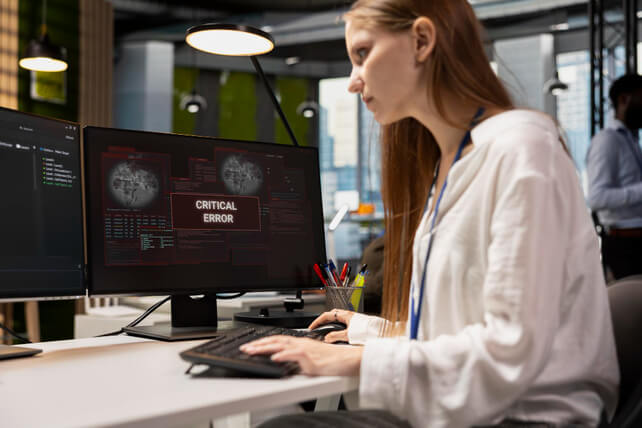
Remote recruiting has made hiring faster and more global, but it has also introduced a new challenge: determining whether the person appearing in an application or video interview is actually who they claim to be.
AI-generated faces, synthetic identities, manipulated IDs, real-time face swaps, cloned voices, and virtual-camera attacks can now make fraudulent candidates considerably harder to identify through manual review alone. Regula specifically identifies recruitment scams as a growing deepfake risk, including false candidate profiles and manipulated interview responses.
Human judgment is also becoming less reliable as a defense. In a 2026 study commissioned by Veriff and conducted with Kantar, participants performed only slightly better than chance when attempting to distinguish authentic visuals from AI-generated or manipulated ones.
For recruiting teams, particularly those hiring remotely for technical, financial, executive, or other high-access roles, identity verification therefore needs to become part of the hiring security process.
Below are 10 deepfake detection and identity verification tools recruiters should consider in 2026.
What Are Deepfake Detection Tools for Recruiters?
Deepfake detection tools use artificial intelligence, biometrics, forensic analysis, liveness detection, metadata, device signals, or combinations of these technologies to determine whether an image, video, voice, document, or person is authentic.
Within recruiting, these technologies can be applied at several stages:
- Candidate application verification
- Identity checks before interviews
- Remote video interviews
- Government ID verification
- Selfie-to-ID matching
- Candidate onboarding
- Employee account activation
- High-risk or privileged-access hiring
The strongest recruiting security strategies do not rely exclusively on detecting whether a video “looks fake.” Instead, they combine deepfake detection with identity verification, liveness testing, document authentication, device intelligence, and human review.
1. Incode Candidate Verification
Best for: End-to-end candidate identity verification
Incode is one of the most directly recruitment-focused options on this list. Its Candidate Verification solution is designed specifically to protect organizations from fraudulent applicants throughout the hiring journey. Before recruiters invest significant time in a candidate, Incode can inspect factors such as email, phone, device, and IP information and assign risk signals to suspicious applicants.
Identity can then be verified before an interview through government ID validation, selfie matching, passive liveness, and deepfake detection. Incode says verification results can appear inside recruiting systems including Greenhouse, Workday, and Ashby. Recruiters can therefore incorporate verification into their existing hiring processes rather than establishing a separate manual workflow.
Its underlying Deepsight technology is designed to detect manipulated or synthetic footage and video injection attacks while verifying that a real individual is present.
For employers concerned about candidate impersonation, fake remote workers, interview substitutes, or fraudulent technical applicants, this combination of recruiting workflow integration and biometric security makes Incode particularly relevant.
2. Facia DeepLiveness
Best for: Real-time interview and identity checks
Facia combines liveness verification with dedicated deepfake detection through its DeepLiveness technology. Instead of simply checking whether movement exists in front of a camera, the technology is designed to determine whether the face itself is authentic and detect AI-generated faces or manipulated inputs.
The company says DeepLiveness runs liveness and face-authenticity checks together in under one second and is available through its SDK and REST API.
Recruiting teams may find Facia particularly interesting because the company explicitly lists video call deepfake detection as a use case. Its technology can analyze live sessions for synthetic faces and real-time deepfake overlays during interviews and confidential meetings.
This makes it suitable for organizations that want additional safeguards during remote interviews rather than limiting verification to candidate onboarding.
3. BioID
Best for: Facial liveness and deepfake-resistant biometric verification
BioID is a biometric identity verification provider offering face recognition, liveness detection, deepfake detection, and ID ownership verification.
Its liveness technology combines several defensive layers. A passive check analyzes facial texture and deepfake indicators, while additional images can enable motion-based 3D detection. Organizations can also implement challenge-response checks that ask users to move their heads in specific directions.
BioID also offers dedicated deepfake detection that can determine whether a face within an image or video is AI-generated, manipulated, or authentic. Its platform provides API integration and supports both active and passive liveness approaches.
Recruiters could use BioID immediately before an important video interview or during remote onboarding to verify that the individual completing the identity check is genuinely present rather than relying only on an uploaded photograph.
4. Veriff
Best for: Global candidate identity verification
Veriff combines document verification, facial biometrics, liveness detection, network signals, and fraud intelligence within its identity verification platform.
Its AI-powered liveness technology checks whether a real individual is present while helping detect spoofing and deepfake attempts. Veriff also incorporates document forensics, behavioral signals, and device/network information into its broader verification workflow.
That broader approach is important for recruiting because a fraudulent candidate may not rely on only one technique. A sophisticated fake applicant could combine an AI-generated face with a synthetic document, suspicious device infrastructure, and manipulated biographical information.
Veriff also reported in January 2026 that its technology detected 100% of synthetic fraudulent documents within the IDNet sample used for a benchmark, with a 99.5% automation rate.
For companies hiring internationally, Veriff may be particularly useful because its platform supports identity verification across a large number of countries and regulatory environments.
5. Jumio Liveness Premium
Best for: High-assurance candidate onboarding
Jumio’s Liveness Premium adds advanced biometric protection against deepfakes and digital injection attacks to its broader identity verification offering.
A typical workflow combines ID authentication with a selfie and liveness check. The system evaluates whether the candidate presenting the document is the same individual shown on the ID and whether the person is genuinely present during verification.
Jumio positions its premium liveness technology specifically as protection against increasingly sophisticated AI-powered identity fraud and injection attacks. The technology received a Gold award in the Biometrics category of the 2026 Cybersecurity Excellence Awards.
For recruiters, Jumio may be most appropriate when identity verification needs to happen as part of a formal pre-employment or onboarding process, particularly for roles involving sensitive information, financial access, infrastructure, or regulated industries.
6. Regula Face SDK
Best for: Combining candidate ID and biometric checks
Regula provides document verification and facial biometric technologies that can be combined into a layered candidate verification process.
Its Face SDK includes both active and passive liveness verification. Active verification asks users to perform an action such as turning their head, while passive verification can work from a selfie. Regula says its liveness technology is designed to defend against spoofing techniques including static images, video replays, masks, injections, and deepfake-related attacks.
The platform is especially relevant to recruitment because Regula has specifically highlighted deepfake-powered recruitment scams. Potential attacks include false candidate identities and manipulated interview responses, making employee identity verification increasingly important for remote organizations.
Recruiters who want to verify both the candidate’s ID document and the person presenting it may therefore find Regula more useful than a standalone media detector.
7. IDnow Biometric Verification
Best for: Privacy-conscious European recruiting workflows
IDnow combines facial matching, liveness detection, document authentication, and additional risk intelligence to determine whether the person completing verification is genuine.
Its biometric verification technology analyzes signals such as facial movement and reflections to differentiate physically present individuals from masks, video replays, and deepfake inputs.
IDnow’s broader fraud platform adds device intelligence, behavioral analytics, document checks, and data verification. The company also describes its liveness technology as capable of detecting deepfake attacks in real time.
For European employers or businesses with significant GDPR requirements, IDnow may be worth considering because its biometric workflows emphasize consent and compliance alongside fraud protection.
Recruiters could use the platform to verify candidates before remote interviews or before providing newly hired employees with company credentials.
8. Yoti MyFace
Best for: Passive candidate liveness checks
Yoti’s MyFace technology provides biometric liveness verification designed to determine whether a real human is physically present during an identity check.
According to Yoti’s 2026 MyFace documentation, the system is designed to defend against presentation and injection attacks including photographs, masks, screen images, replayed video, deepfake video, injected content, and bots. Yoti states that its MyFace technology has achieved iBeta Level 3 approval for Presentation Attack Detection.
Yoti also offers both passive and active liveness configurations. Passive verification can provide a relatively low-friction candidate experience because users do not necessarily need to perform multiple challenge actions.
This could be useful for high-volume recruiting teams that want stronger identity assurance without adding lengthy verification steps for every applicant.
9. DuckDuckGoose AI
Best for: Forensic analysis of suspicious candidate media
DuckDuckGoose AI takes a more forensic approach to deepfake detection than traditional candidate identity verification platforms.
Its DeepDetector product analyzes images and video for synthetic manipulation, while Waver provides audio deepfake detection. The company also offers Phocus, a browser-based workspace where investigators can inspect image, video, and audio files without building their own integration.
For recruiting teams, this may be useful when a specific application, recorded interview, profile photograph, voice recording, or other piece of candidate media appears suspicious and requires further examination.
DuckDuckGoose also provides SDK and API options that organizations can incorporate into existing verification systems. Its platform emphasizes explainable results rather than returning only a generic probability score, which could help security and HR teams investigate flagged applicants.
Unlike an end-to-end recruiting verification solution, however, DuckDuckGoose may be better viewed as a specialized detection layer within a broader candidate fraud prevention strategy.
10. Attestiv DeepScan
Best for: Checking candidate documents and submitted media
Attestiv helps organizations authenticate digital files including photographs, documents, video, and audio. Its platform uses multiple forensic models to identify anomalies and manipulation while generating scores and reports that organizations can incorporate into automated workflows.
In July 2026, Attestiv launched DeepScan, which expands its approach beyond isolated deepfake detection by validating submitted photos, documents, audio, and video against forensic signals, workflow information, and configurable business rules.
Attestiv explicitly identifies human resources as one of the industries that can use its digital asset validation technology.
For recruiters, that makes the platform particularly interesting for checking candidate-submitted files. Organizations could potentially apply verification rules to documents, recorded assessments, photographs, or video submissions before they are used to make hiring decisions.
Quick Comparison of the Best Deepfake Detection Tools for Recruiters
| Tool | Best For | Key Capability |
| Incode | End-to-end candidate verification | Candidate identity, liveness and deepfake detection |
| Facia | Remote interviews | Real-time face and deepfake verification |
| BioID | Biometric verification | Active/passive liveness and facial deepfake detection |
| Veriff | Global hiring | Identity, document and behavioral fraud checks |
| Jumio | Secure onboarding | ID verification and advanced liveness |
| Regula | ID + biometric authentication | Document verification and face liveness |
| IDnow | European hiring | Biometrics, fraud signals and privacy-focused verification |
| Yoti | Low-friction verification | Passive and active liveness |
| DuckDuckGoose AI | Media forensics | Image, video and voice deepfake analysis |
| Attestiv | Submitted files | Media, document and deepfake validation |
What Should Recruiters Look for in a Deepfake Detection Tool?
Not every deepfake detection platform is designed for recruitment. When evaluating technology, recruiters and HR security teams should consider:
- Live video detection: Can the system identify manipulated media during an interview rather than only after the recording is uploaded?
- Liveness detection: Does it confirm that a real person is physically present?
- Identity matching: Can it compare a live candidate with a government-issued ID?
- Document verification: Can it detect manipulated or synthetic identity documents?
- Injection attack protection: Can it detect a fake feed inserted through a virtual camera?
- Audio protection: Can it identify cloned or AI-generated voices?
- ATS integration: Can verification results flow into existing recruitment software?
- API and SDK availability: Can the security layer be embedded into an existing hiring workflow?
- Candidate experience: Does verification create unnecessary steps for legitimate applicants?
- Privacy and compliance: How are biometric information, IDs, and recordings stored, processed, and deleted?
- Human review: Can suspicious results be escalated rather than automatically rejecting candidates?
How Recruiters Can Use Deepfake Detection During Hiring
Deepfake detection should not necessarily mean scanning every interaction with every candidate. A risk-based approach is usually more practical.
1. Before the Interview
Verify candidate identity before high-value interview stages. A smart verification link can confirm ID ownership, facial similarity, and liveness before the candidate joins the meeting.
2. During Remote Interviews
For sensitive roles, organizations can add real-time detection or additional authentication when there are indications of manipulated video, synthetic audio, or candidate substitution.
3. Before Making an Offer
Perform stronger identity verification before extending offers for positions involving financial systems, customer information, intellectual property, production infrastructure, source code, or privileged company access.
4. During Onboarding
Reconfirm identity before issuing company equipment, credentials, VPN access, payment information, or administrative privileges.
This creates a chain of identity assurance from application through employment rather than treating identity verification as a one-time exercise.
Deepfake Detection Should Not Automatically Reject Candidates
Detection systems are not infallible.
Poor cameras, network compression, unusual lighting, accessibility requirements, or technical errors may occasionally produce suspicious signals. Research published around deepfake detection continues to emphasize the difficulty of maintaining detector robustness as synthetic media technologies and media transformations evolve.
Recruiters should therefore use detection results as a risk signal rather than an automatic hiring decision.
A candidate flagged by a system could be asked to complete an alternative verification process, provide an additional identity document, attend another authenticated session, or undergo manual review.
This approach protects the company without turning an imperfect technical signal into an unfair hiring outcome.
Final Thoughts
Deepfake recruiting fraud changes a basic assumption behind remote hiring: seeing and speaking with someone on camera can no longer be treated as sufficient proof of identity.
That does not mean recruiters need to make every hiring process complicated. It means organizations should introduce stronger identity assurance at the stages where impersonation creates the greatest risk.
Platforms such as Incode, Facia, BioID, Veriff, Jumio, Regula, IDnow, Yoti, DuckDuckGoose AI, and Attestiv give employers different ways to address the problem—from candidate-specific identity checks and facial liveness verification to forensic analysis of suspicious media.
For most recruiting organizations in 2026, the strongest approach will be layered: verify the candidate’s identity, establish that a live human is present, check for synthetic or manipulated media, and route questionable cases to human reviewers.
As remote hiring expands and generative AI becomes more capable, deepfake detection is likely to move from an unusual cybersecurity precaution to a standard component of secure digital recruitment.
Frequently Asked Questions
1. Can deepfakes really be used in job interviews?
Yes. Deepfakes and synthetic identities can be used to impersonate candidates, create fake applicant profiles, manipulate video calls, or enable one person to interview on behalf of another. Regula has specifically identified recruitment scams as one of the areas affected by deepfake technology.
2. What is the best deepfake detection tool for recruiters?
The best choice depends on the hiring workflow. Incode stands out for recruiting-specific candidate verification, while Facia is particularly relevant to real-time video verification. Platforms such as Veriff, Jumio, Regula, IDnow, BioID, and Yoti are better suited when biometric identity verification is the primary requirement.
3. Can recruiters detect deepfakes manually?
Recruiters may notice obvious inconsistencies, but relying on visual inspection alone is increasingly unreliable. Veriff’s 2026 research found that people performed only slightly above chance when distinguishing manipulated visuals from authentic ones.
4. What is liveness detection?
Liveness detection determines whether biometric information is being captured from a real person physically present during verification rather than from a photograph, recorded video, mask, synthetic image, or other spoof.
5. Is deepfake detection enough to stop candidate fraud?
No. Employers should combine deepfake detection with document authentication, identity verification, liveness checks, device and network intelligence, background screening, and appropriate human review.