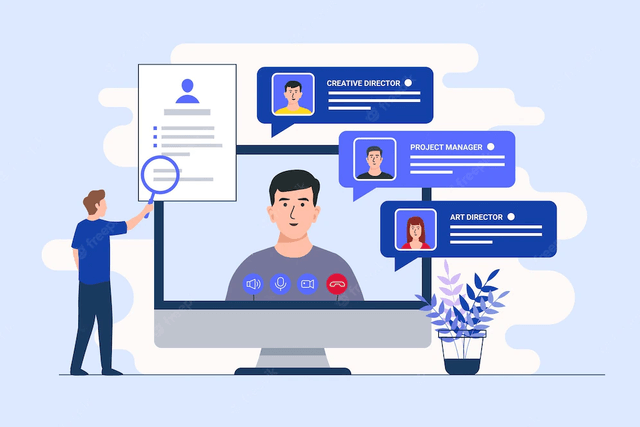




Hiring teams can no longer rely entirely on resumes, education, previous job titles, and unstructured interviews to determine whether someone will succeed in a role. Candidates may look qualified on paper but lack essential practical skills, while strong applicants can be overlooked because their experience does not follow a traditional career path.
New hire assessment tools help recruiters evaluate candidates using job simulations, skills tests, cognitive assessments, behavioral profiles, structured interviews, and role-specific exercises. Although these platforms are frequently described as pre-employment assessment tools, they can support several stages of the hiring process, from initial screening to final candidate comparison.
The strongest platforms in 2026 go beyond multiple-choice testing. They provide realistic work samples, AI-assisted assessment creation, structured scoring, anti-cheating controls, applicant tracking system integrations, and reports that hiring managers can understand.
Below are 12 of the best new hire assessment tools recruiters should consider in 2026.
Quick Overview of the Best New Hire Assessment Tools
- Canditech: Best for realistic job simulations
- Vervoe: Best for AI-scored skills assessments
- iMocha: Best for enterprise skills intelligence
- Bryq: Best for measuring skills and behavioral fit together
- Cangrade: Best for predictive candidate screening
- HighMatch: Best for personalized role-fit assessments
- ThriveMap: Best for high-volume and entry-level hiring
- Talogy: Best for enterprise psychometric assessment programs
- Sapia.ai: Best for structured conversational assessments
- Mercer | Mettl: Best for customizable and securely proctored tests
- Plum by Phenom: Best for durable skills and human potential
- HireVue: Best for combined assessments and digital interviewing
1. Canditech
Best for: Realistic job simulations across technical and nontechnical roles
Canditech is a pre-employment assessment platform designed to evaluate how candidates perform tasks that resemble the actual job. Instead of relying exclusively on theoretical questions, recruiters can create simulations involving spreadsheets, presentations, written assignments, coding exercises, video responses, and other role-specific activities.
The platform supports technical skills, soft skills, cognitive abilities, personality characteristics, and AI proficiency assessments. Recruiters can start with more than 500 prebuilt tests or use its AI Assessment Builder to create an evaluation from a job description. Canditech also provides live coding interviews, coding projects, automated scoring, anti-cheating functionality, employer branding, and integrations with more than 40 applicant tracking systems.
Canditech is particularly valuable for employers that want candidates to demonstrate their capabilities rather than simply describe them. Its variety of question formats makes it suitable for sales, marketing, finance, customer service, operations, data, and software development roles.
Key features:
- Realistic job simulation tests
- AI-powered assessment creation
- Technical and soft skills testing
- Coding projects and live coding interviews
- Anti-cheating controls
- Custom branding and ATS integrations
2. Vervoe
Best for: Automatically scoring practical skills assessments
Vervoe is a skills intelligence platform that enables employers to evaluate candidates based on demonstrated ability. Recruiters can choose from a library of more than 300 assessments, customize existing tests, or upload a job description to generate a role-specific assessment using AI.
Its assessments support text, video, audio, spreadsheet, presentation, coding, and other interactive question formats. Vervoe’s AI scoring system evaluates candidate responses and prioritizes applicants according to their demonstrated performance. The platform can also provide cognitive assessments, automated reference checking, AI chatbot screening, interview scheduling, and AI-readiness assessments.
One of Vervoe’s strongest advantages is its focus on practical evidence. Hiring teams can review the responses behind a candidate’s score instead of receiving only a general rating. This can help recruiters explain assessment results to hiring managers and compare candidates more consistently.
Key features:
- AI-generated role-specific assessments
- Practical, task-based questions
- Automated candidate scoring
- Cognitive ability assessment
- Skills-based interview guidance
- ATS, API, and webhook integrations
3. iMocha
Best for: Enterprise technical and functional skills assessment
iMocha is an AI-powered skills assessment and skills intelligence platform built for recruitment, workforce development, and skills-gap analysis. Its assessment library covers coding, technical, cognitive, communication, functional, and domain-specific capabilities.
The platform provides more than 10,000 assessments covering numerous business and technology domains. Hiring teams can use project-based exercises, live coding interviews, automated video interviews, communication assessments, coding simulators, and AI-enabled proctoring to evaluate candidates remotely.
iMocha is a strong option for organizations hiring across multiple departments, countries, or business units. In addition to screening external applicants, employers can use the same skills data to evaluate existing employees, identify capability gaps, support internal mobility, and plan reskilling initiatives.
Key features:
- Extensive skills and assessment library
- Coding and technical simulations
- AI-enabled remote proctoring
- Live coding interviews
- English communication assessments
- Hiring and employee skills analytics
4. Bryq
Best for: Combining cognitive, behavioral, and practical skills data
Bryq helps hiring teams evaluate cognitive ability, personality traits, job-related skills, and AI fluency within a unified candidate profile. Its assessments are designed to help employers understand whether an applicant possesses both the ability and behavioral tendencies needed to succeed in a particular role.
The platform measures areas such as numerical reasoning, verbal reasoning, logical reasoning, attention to detail, communication, adaptability, and work preferences. Bryq also offers simulation-based AI fluency assessments intended to measure how candidates apply AI concepts and tools in practical workplace situations.
Rather than presenting hiring managers with disconnected test scores, Bryq converts the results into role-fit insights and candidate comparisons. It is suitable for organizations that want a broader assessment than a standalone personality questionnaire or technical test.
Key features:
- Cognitive ability testing
- Behavioral and personality assessments
- Hard skills evaluation
- Practical AI fluency assessment
- Role-specific candidate matching
- ATS-compatible hiring workflows
5. Cangrade
Best for: Predicting job success and reducing subjective screening
Cangrade is a science-backed talent assessment platform that uses psychometric evaluation and job-specific screening to help employers identify candidates who are likely to perform well. Its assessments are developed with input from industrial-organizational psychologists and can be customized around an employer’s roles and business objectives.
The platform combines pre-hire assessments, hard skills testing, structured interview guides, automated reference checking, candidate matching, and video interviewing. Cangrade can also learn from an organization’s existing high performers to identify the qualities associated with success in a particular position.
Cangrade is especially useful when hiring teams want to connect assessment results with measurable outcomes such as performance, retention, quality of hire, or time to productivity. Recruiters can use its candidate insights to decide whom to interview and generate more structured follow-up questions.
Key features:
- Psychometric pre-hire assessments
- AI-generated skills assessments
- Job-fit and success predictions
- Structured interview guides
- Automated reference checking
- Candidate matching and analytics
6. HighMatch
Best for: Assessments tailored to a company’s specific success criteria
HighMatch provides personalized pre-employment assessments built around the requirements of an organization, position, and working environment. Instead of applying the same generic benchmark to every employer, the platform helps companies define the traits, skills, and behaviors that are most important for their roles.
Its HighMatch Assess product evaluates candidate traits, capabilities, and job fit, while workplace psychologists help organizations personalize the assessment and interpretation process. HighMatch also offers Berke, a configurable pre-employment assessment designed to provide deeper insight into how someone is likely to approach the job.
The reports are created to be understandable for hiring managers, making the platform useful for companies that need assessment results to support interviews and final selection decisions. HighMatch can be particularly valuable for specialized positions where generic occupational benchmarks may not reflect the organization’s real working environment.
Key features:
- Personalized assessment design
- Job-fit and behavioral insights
- Skills and personality measurement
- Support from workplace psychologists
- Manager-friendly candidate reports
- Interview and selection guidance
7. ThriveMap
Best for: Entry-level and high-volume hiring
ThriveMap specializes in realistic pre-hire assessments for entry-level and high-volume positions. Its assessments are designed to recreate a “day in the life” of the job, allowing candidates to experience typical tasks, scenarios, and decisions before they are hired.
Rather than offering only a large generic test library, ThriveMap develops job simulations around the employer’s specific working environment. It serves industries and role categories such as retail, hospitality, warehousing, contact centers, healthcare, field technicians, graduate recruitment, apprenticeships, and entry-level sales.
ThriveMap can help employers address early attrition by showing applicants what the position actually involves while simultaneously evaluating their suitability. It is a practical option for organizations experiencing high application volumes, inconsistent hiring decisions, or significant employee turnover during the first few months.
Key features:
- Realistic “day in the life” assessments
- Bespoke job simulations
- Entry-level candidate screening
- High-volume hiring support
- ATS workflow integrations
- Role and industry-specific assessment design
8. Talogy
Best for: Global enterprise assessment and talent programs
Talogy provides an extensive portfolio of assessments and consulting services covering candidate selection, leadership, employee development, safety, early-career hiring, and internal mobility. Its assessment catalog includes cognitive ability tests, personality questionnaires, situational judgment tests, job simulations, and specialized industrial assessments.
TalogyTech is the company’s online assessment platform. It helps employers administer tests, manage candidate data, produce reports, apply employer branding, support multiple languages, and integrate assessments with an existing ATS. Talogy Hire also provides best-match scores and group ranking reports to help recruiters compare applicants.
Talogy is most suitable for larger companies that need scientifically developed assessments across several countries, job families, or employee levels. Its combination of technology and consulting support can help organizations establish a more consistent assessment strategy instead of purchasing separate tests for individual vacancies.
Key features:
- Cognitive and personality assessments
- Situational judgment tests
- Job simulations
- Leadership and early-career assessments
- Multilingual assessment delivery
- Enterprise ATS integrations
9. Sapia.ai
Best for: Mobile-first, structured candidate conversations
Sapia.ai takes an interview-led approach to candidate assessment. Its platform conducts structured, text-based interviews in which applicants respond to the same job-relevant questions. The responses are evaluated against defined competencies, enabling recruiters to compare large candidate pools more consistently.
The platform’s Job Analysis Studio can analyze job requirements and generate competency-aligned questions and scoring criteria. Sapia.ai’s assessment approach focuses on written responses rather than facial expressions, voice characteristics, or resume keywords. Its interviews are designed to be mobile-friendly, untimed, and accessible to candidates applying across different locations.
Sapia.ai is a useful choice for employers that want to give more applicants an opportunity to demonstrate their communication, judgment, motivation, and workplace behavior without scheduling thousands of initial interviews.
Key features:
- Structured text-based AI interviews
- Competency-aligned questions
- Explainable candidate scoring
- Mobile-friendly candidate experience
- High-volume applicant screening
- Interview scheduling and ATS workflows
10. Mercer | Mettl
Best for: Custom testing with advanced remote proctoring
Mercer | Mettl provides an online assessment platform for pre-employment screening, employee development, certification, and academic testing. Employers can use the platform to assess aptitude, technical knowledge, communication skills, personality, behavior, and job-specific competencies.
Assessments can be customized according to the difficulty, skills, scenarios, and communication requirements of a role. Mercer | Mettl also supports numerous question formats and provides AI-powered remote proctoring to help organizations conduct secure assessments for candidates in different locations.
Its breadth makes it suitable for campus hiring, lateral recruitment, technical recruitment, leadership evaluation, and large-scale enterprise testing. Organizations that require secure test delivery or highly customized assessments may find Mercer | Mettl particularly useful.
Key features:
- Aptitude and cognitive tests
- Technical and domain assessments
- Personality and behavioral evaluations
- Custom assessment development
- AI-based remote proctoring
- Scalable online test administration
11. Plum by Phenom
Best for: Evaluating durable skills and long-term potential
Plum is a psychometric talent assessment platform that measures capabilities such as adaptability, communication, judgment, innovation, empathy, execution, and resilience. Rather than concentrating primarily on previous experience, Plum helps employers understand the durable human skills that influence how a candidate may perform in a role.
Employers can define the behavioral requirements of a position through Plum’s Role Model and compare applicants against that benchmark. Its assessments combine elements of cognitive ability, situational judgment, and behavioral tendencies to produce role-match insights.
Plum was acquired by Phenom in April 2026. The combination is intended to bring role-specific behavioral and situational assessments into Phenom’s broader talent experience and agentic HR technology platform.
Key features:
- Durable skills assessment
- Behavioral and cognitive insights
- Situational judgment evaluation
- Role-specific success benchmarks
- Candidate potential identification
- Hiring and internal mobility applications
12. HireVue
Best for: Combining assessments, interviews, and hiring automation
HireVue combines skills validation, digital interviewing, candidate engagement, and workflow automation in one enterprise hiring platform. Its assessment capabilities include Virtual Job Tryouts, game-based psychometric tests, coding challenges, language assessments, job simulations, and structured video interviews.
In February 2026, HireVue introduced Assessment Builder, which uses AI to analyze job descriptions and help employers create role-specific assessments. The company also offers science-backed assessments designed to measure the competencies connected with job performance.
HireVue is well suited to large organizations that want to combine candidate screening and interviewing rather than managing separate providers for each stage. Recruiters can assess role-specific capabilities, automate scheduling, conduct on-demand interviews, and move candidates through structured workflows.
Key features:
- Virtual Job Tryout simulations
- AI-supported Assessment Builder
- Game-based psychometric assessments
- Coding and technical challenges
- On-demand and structured interviews
- Candidate engagement automation
How to Choose a New Hire Assessment Tool
The right assessment platform depends on the roles being filled, the number of candidates being processed, and the type of evidence recruiters need before making a hiring decision.
Consider the following factors when comparing tools:
1. Assessment type
Determine whether the organization needs practical skills testing, cognitive assessment, behavioral profiling, technical testing, structured interviews, job simulations, or a combination of these methods.
2. Relevance to the job
Assessments should measure capabilities that candidates will actually use in the position. Generic tests may be convenient, but realistic tasks and role-specific scenarios usually provide more actionable information.
3. Candidate experience
Long, confusing, or irrelevant tests can increase applicant abandonment. Review the assessment length, mobile accessibility, instructions, accommodation options, and feedback provided to candidates.
4. Scientific validity
Ask vendors how their assessments were developed, validated, and monitored. Employers should understand what each score measures and whether the test is appropriate for the role and candidate population.
6. Integrations
A platform that integrates with the company’s ATS can automatically send invitations, update candidate records, and make assessment results accessible without adding manual work.
7. Security and test integrity
For technical, academic, regulated, or high-stakes roles, look for question randomization, browser monitoring, identity verification, plagiarism detection, coding replay, or remote proctoring.
8. Reporting
Assessment reports should provide more than a pass-or-fail result. Recruiters and hiring managers need understandable insights that can guide interviews, comparisons, onboarding, and final hiring decisions.
Benefits of Using New Hire Assessment Software
When applied appropriately, assessment platforms can help recruiting teams:
- Compare applicants using consistent criteria
- Identify candidates with practical job skills
- Reduce dependence on resumes and credentials
- Structure interviews around evidence
- Process large applicant volumes faster
- Improve collaboration between recruiters and hiring managers
- Give nontraditional candidates an opportunity to demonstrate ability
- Collect data that can be compared with post-hire performance
- Provide candidates with a realistic preview of the role
Assessments should not operate as an entirely isolated hiring decision. The results are most useful when combined with structured interviews, verified work history, reference checks, and human review.
Frequently Asked Questions
1. What is a new hire assessment tool?
A new hire assessment tool is software that evaluates a candidate’s skills, abilities, behavior, cognitive capabilities, or job fit before an employer makes a final hiring decision. The assessment may involve tests, simulations, structured interviews, work samples, games, or role-specific exercises.
2. What types of pre-employment assessments are available?
Common assessment types include cognitive ability tests, personality assessments, situational judgment tests, coding challenges, communication tests, job simulations, work samples, language assessments, integrity tests, and structured video or text interviews.
3. When should recruiters assess candidates?
Assessments can be used during initial screening, after a recruiter interview, before a hiring-manager interview, or during final selection. Short and accessible assessments work better near the beginning of a high-volume process, while longer work samples are usually more appropriate after the candidate pool has been narrowed.
4. Can assessment tools reduce hiring bias?
Structured assessments can reduce some forms of subjectivity by asking candidates the same questions and applying consistent scoring criteria. However, employers still need to examine the relevance, accessibility, validity, and potential adverse impact of every assessment they use.
5. Should every applicant complete an assessment?
Not necessarily. The decision depends on the role, application volume, assessment length, and hiring stage. Requiring a lengthy project from every applicant may create a poor candidate experience. Recruiters should keep early assessments focused and reserve extensive exercises for serious candidates.
Final Thoughts
The best new hire assessment tools in 2026 help employers understand what candidates can do, how they approach work, and whether their capabilities align with the role. Platforms such as Canditech, Vervoe, and ThriveMap emphasize realistic work simulations, while Bryq, Cangrade, HighMatch, and Plum provide deeper insight into cognitive ability, behavioral tendencies, and potential.
Enterprise platforms including iMocha, Talogy, Mercer | Mettl, and HireVue support broader assessment programs across multiple roles and locations. Sapia.ai offers a different approach by turning the initial interview into a structured, scalable candidate assessment.
Before selecting a platform, recruiters should identify the capabilities that genuinely predict success in each position. The assessment should then be designed around those capabilities, integrated into a structured hiring process, and regularly compared with post-hire performance.