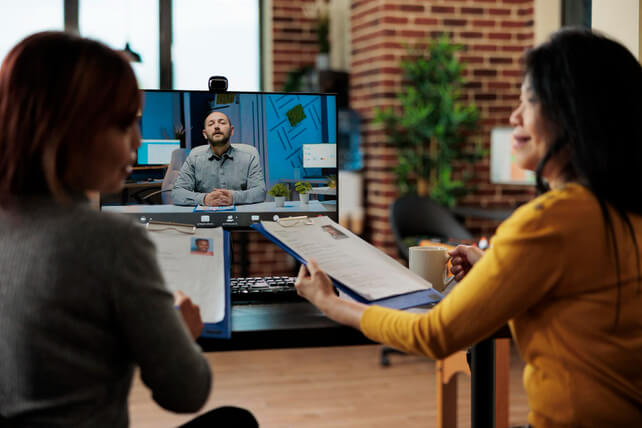




Hiring a candidate does not end when the offer letter is signed. For U.S. employers, one of the most important onboarding requirements is verifying that every new employee is authorized to work in the United States. Form I-9 is used to verify a new hire’s identity and employment authorization, making accurate completion and recordkeeping an essential part of the hiring process.


For recruiters and HR teams managing dozens, hundreds, or even thousands of new hires, handling I-9 forms manually can quickly become complicated. Missing information, incorrect dates, expiring work authorizations, scattered documents, and remote employees can all create unnecessary administrative work and compliance risk.
Modern I-9 and employment eligibility verification software helps automate much of this process. These platforms can guide employees through electronic Form I-9 completion, connect directly with E-Verify, track reverifications, retain audit trails, and support distributed hiring teams.
Remote hiring has made these capabilities particularly important. Employers participating in E-Verify and in good standing may use the DHS-authorized alternative procedure to remotely examine qualifying employees’ Form I-9 documents, subject to the applicable requirements.
Below are 10 I-9 and employment eligibility verification platforms recruiters should consider.
1. Paylocity
Paylocity incorporates I-9 and E-Verify functionality into its employee onboarding and HR platform. Recruiters can use the system to collect electronic signatures and employment documents, monitor work authorization information, and manage relevant compliance records without moving new employees through several disconnected applications. Its onboarding tools also support mobile access, which can help new hires complete documentation before or around their start date.
For organizations using Paylocity across HR and payroll, this integrated approach can make I-9 compliance a natural part of employee onboarding instead of a separate administrative task. Paylocity has also automated parts of the E-Verify workflow so that case information can be stored alongside employee eligibility documents once processing is completed. It is therefore a strong candidate for mid-sized organizations that need broader HCM functionality but still want structured I-9 and employment verification processes.
Best for: Mid-sized employers seeking integrated onboarding and HR software.
2. Mitratech I-9 Compliance
Mitratech I-9 Compliance, historically known through the Tracker I-9 platform, is a purpose-built solution for organizations that want extensive control over I-9 compliance. The system supports electronic I-9 completion, E-Verify workflows, remote verification, compliance tracking, reporting, integrations, and audit-ready records. Smart workflows can automatically submit eligible completed I-9 records to E-Verify, helping teams reduce the manual handoff between completing forms and opening verification cases.
Mitratech is particularly well suited to larger HR and legal teams where compliance oversight is just as important as onboarding speed. API integrations allow I-9 information to connect with existing HR systems, while role-based processes can help organizations standardize verification across departments and locations. Its remote verification capabilities also make the platform relevant for employers onboarding people outside traditional offices.
Best for: Enterprises with sophisticated HR and legal compliance requirements.
3. WorkBright
WorkBright is a specialized electronic I-9 and E-Verify platform designed to make employment eligibility verification easier for distributed and high-volume workforces. The platform combines Form I-9 completion, document review, compliance validation, E-Verify case management, and remote verification capabilities in one workflow. WorkBright says its system includes more than 150 automated compliance checks designed to identify missing or potentially incorrect information before a form moves further through the process.
For recruiters handling remote, seasonal, field-based, or multi-location workers, WorkBright’s mobile-first approach is particularly useful. New hires can complete required steps from their own devices while administrators monitor completion and verification centrally. Its integrated E-Verify functionality can also reduce duplicate data entry by carrying information from the I-9 workflow into the verification process. Organizations that want a dedicated I-9 solution rather than another full HR suite may find WorkBright especially attractive.
Best for: Remote and high-volume hiring teams.
4. EMP Trust HR
EMP Trust provides an electronic Form I-9 platform that automates the process from employee data collection through electronic signatures, verification, record storage, auditing, and ongoing compliance tracking. Built-in error checking and form guidance can help employees and administrators identify potential issues during completion rather than discovering them later during an internal or government audit. The system also provides dashboards and reporting for monitoring verification status across the workforce.
Remote verification is another major component of EMP Trust’s offering. The company provides access to a network of remote agents that can assist organizations with Section 2 verification across the United States, while the platform incorporates E-Verify integration, audit trails, and reverification alerts. EMP Trust can therefore be a good option for staffing companies, distributed employers, and organizations with significant numbers of remote hires.
Best for: Distributed organizations requiring remote verification support.
5. i9 Intelligence
i9 Intelligence is a dedicated I-9 compliance platform designed around the full employment eligibility verification lifecycle. It supports employee self-service for Section 1, Section 2 workflows, automated E-Verify submission, reverification tracking, compliance validation, secure recordkeeping, and audit preparation. Its specialist approach makes it an alternative to basic I-9 modules bundled within larger HR platforms.
One differentiator is its managed remote Section 2 verification option. i9 Intelligence provides trained U.S.-based authorized representatives who can conduct verification sessions with remote employees, reducing the need for HR teams to locate and coordinate their own representatives. For recruiters hiring employees across multiple states, this can make distributed onboarding considerably easier while keeping records and verification activity within a centralized platform.
Best for: Employers wanting dedicated I-9 software with managed remote verification.
6. Clear I-9 by HRlogics
Clear I-9 is a standalone I-9 compliance platform from HRlogics designed specifically around employment eligibility rather than broader HR administration. The software supports electronic I-9 completion, E-Verify integration, live video verification, audit-ready document storage, expiration tracking, dashboards, and detailed activity histories. Because the product operates independently from a company’s HRIS, organizations can use it without replacing the recruiting, payroll, or HR systems they already have.
That standalone approach can be especially useful for staffing agencies and multi-location businesses where I-9 workflows need to remain consistent even if different departments or business units use different HR systems. Clear I-9 also offers virtual verification agent options for distributed employees and centralized dashboards that allow HR teams to monitor outstanding forms, expirations, and updates.
Best for: Staffing agencies and companies wanting a standalone I-9 system.
7. HireRight Form I-9 and E-Verify
HireRight combines Form I-9 and E-Verify capabilities with its broader employment screening services. Its web-based solution allows employers to manage I-9 forms electronically while incorporating E-Verify into the workflow. The platform includes functionality for managing users, permissions, electronic verification processes, authorized representatives, documentation, and related I-9 activities.
For recruiting teams already using HireRight for background screening, consolidating employment eligibility verification within the same vendor ecosystem may simplify the transition from candidate screening to onboarding. Rather than managing a separate vendor strictly for Form I-9, employers can build eligibility verification alongside other pre-employment workflows. This makes HireRight particularly relevant to enterprises and staffing teams processing high numbers of screenings and new hires.
Best for: Employers combining background screening and I-9 verification.
8. First Advantage / Sterling Form I-9 and E-Verify
Sterling’s Form I-9 and E-Verify services, now within First Advantage following the companies’ combination, provide employers with tools for electronically managing employment eligibility verification alongside broader workforce screening. The solution supports electronic I-9 workflows and E-Verify as well as virtual document review options for eligible customers using E-Verify.
The platform can be especially useful for recruiters who want employment eligibility verification to sit alongside background checks, identity verification, drug and health screening, and other hiring services. Sterling’s virtual I-9 document review offering also gives qualifying organizations another way to support employees who are not located near an HR office. For larger recruiting operations, having these services within one screening ecosystem can reduce vendor fragmentation.
Best for: Enterprise recruiting and background-screening programs.
9. Paycom
Paycom takes a different approach from specialist I-9 vendors by incorporating Form I-9 and E-Verify into a broader HR and payroll platform. New-hire information can flow directly into its E-Verify functionality, reducing the need for HR staff to repeatedly enter employee information across separate systems. E-Verify cases can be managed inside the same software organizations use for other employee processes.
Paycom also supports electronic I-9 management, document storage, audit trails, reporting, and reminders related to employment verification. Its software can notify HR teams about documents that require attention while centralizing workforce records alongside other employee information. For companies already looking for payroll, HR, talent management, and onboarding technology, choosing an all-in-one platform such as Paycom can eliminate the need for another standalone I-9 application.
Best for: Companies wanting I-9 verification within an all-in-one HR platform.
10. Equifax I-9 HQ
Equifax Workforce Solutions offers I-9 HQ, an enterprise-focused electronic I-9 management platform built to automate Form I-9 completion and employment eligibility workflows. It supports electronic I-9 processing, E-Verify integration, audit trails, centralized records, and compliance management. Equifax positions the product as a scalable solution that can work for organizations ranging from smaller employers to large enterprises managing significant hiring volumes.
Equifax also offers I-9 Anywhere for organizations that need additional assistance completing Section 2 for geographically dispersed workers. This can be valuable for companies that do not have HR representatives near every employee or hiring location. Combined with Equifax’s broader workforce services infrastructure, I-9 HQ is worth considering for enterprises that want highly structured I-9 administration and integration with existing HR technology.
Best for: Large and multi-location enterprises.
What Does I-9 Verification Software Do?
I-9 verification software digitizes and manages the process employers use to complete and retain Form I-9. USCIS requires employers to use Form I-9 to verify the identity and employment authorization of individuals hired for employment in the United States.
Instead of using paper forms, spreadsheets, email attachments, and manual reminders, employers can use specialized software to standardize the workflow.
Common capabilities include:
- Electronic Form I-9 completion
- Electronic signatures
- Automated field validation
- E-Verify integration
- Secure document collection
- Remote Section 2 workflows
- Reverification reminders
- Expiration tracking
- Role-based permissions
- Centralized record storage
- Audit trails and reporting
- HRIS, ATS, payroll, or onboarding integrations
The strongest platform for a particular company depends heavily on its hiring model. A staffing agency hiring hundreds of temporary workers each week may have very different requirements from a technology company onboarding 20 remote professionals per month.
Form I-9 vs. E-Verify: What Recruiters Should Know
Form I-9 and E-Verify are related, but they are not the same process.
Form I-9 is used by employers to document verification of a new employee’s identity and authorization to work in the United States. E-Verify is a web-based federal system that enrolled employers use to compare information from Form I-9 with government records to help confirm employment eligibility.
Employers therefore should not assume that using E-Verify eliminates their Form I-9 responsibilities. A good employment eligibility platform manages the underlying I-9 process and, where applicable, connects that workflow to E-Verify.
How to Choose I-9 and Employment Eligibility Verification Software
1. Look for strong error-prevention controls
Data validation can help recruiters catch incomplete fields, inconsistent information, missing signatures, and other problems while an I-9 is being completed.
2. Consider E-Verify integration
Organizations enrolled in E-Verify can reduce duplicate administrative work when cases can be created and tracked from information already collected during the I-9 process.
3. Evaluate remote hiring capabilities
Distributed companies should investigate exactly how a vendor handles remote verification. USCIS permits E-Verify participants in good standing to use an optional DHS-authorized alternative procedure for qualifying remote document examination, provided applicable requirements are followed.
4. Check reverification and expiration management
Employment authorization may need to be reverified for certain employees. Automatic alerts can make it easier for HR teams to identify upcoming actions before important dates are missed.
5. Examine audit capabilities
Look for detailed audit trails, change histories, timestamps, centralized storage, and reporting tools. Being able to quickly locate relevant records is particularly important when managing a large workforce.
6. Review ATS and HRIS integrations
For recruiters, I-9 software works best when it fits naturally between recruiting and employee onboarding. Integrations can prevent HR teams and employees from entering the same information repeatedly.
7. Think about hiring volume
A small company hiring a few people each month may prefer I-9 functionality within an existing HCM system. A staffing agency processing hundreds of employees across different clients and states may benefit more from a dedicated compliance platform.
Why I-9 Software Matters for Recruiting Teams
Recruiters are increasingly involved in more than candidate sourcing and interviewing. In many organizations, talent acquisition teams coordinate preboarding, screening, document collection, and the transition from candidate to employee.
I-9 automation helps create a cleaner handoff. Instead of recruiters chasing incomplete paperwork through emails and spreadsheets, candidates can move into a standardized digital verification workflow after accepting an offer.
The benefits can include:
- Less repetitive administrative work
- Faster onboarding
- More consistent hiring processes
- Better visibility into incomplete forms
- Easier management of remote employees
- Centralized documentation
- Reduced manual data entry
- Easier preparation for internal compliance reviews
Which I-9 Software Is Best for Recruiters?
There is no single platform that fits every employer.
WorkBright, i9 Intelligence, EMP Trust, and Clear I-9 are particularly appealing when an organization wants a specialized I-9 platform with strong remote-work capabilities.
Equifax I-9 HQ and Mitratech I-9 Compliance are strong options for larger organizations that need centralized compliance controls, integrations, and enterprise-scale workflows.
HireRight and First Advantage/Sterling make sense for recruiters who want to combine employment eligibility verification with a broader background-screening program.
Meanwhile, Paycom and Paylocity are better suited to employers that prefer I-9 and E-Verify functionality to operate inside a broader HR, payroll, and onboarding ecosystem.
Before choosing software, recruiters should assess hiring volume, employee locations, existing HR technology, E-Verify participation, integration requirements, and how much direct compliance support their internal HR team needs.
Final Thoughts
Employment eligibility verification is a small part of the employee lifecycle, but it can become a major operational challenge when hiring volume increases. Paper forms and fragmented processes make it harder for recruiting and HR teams to know which forms are complete, which employees still require action, and whether important records are being retained consistently.
The best I-9 software platforms turn verification into a structured part of onboarding. Whether that means adopting a dedicated system such as WorkBright, Mitratech, EMP Trust, i9 Intelligence, or Clear I-9, an enterprise solution such as Equifax, or integrated HR software such as Paycom or Paylocity depends on how and where an organization hires.
For recruiters, the goal is ultimately straightforward: create a verification process that is easier for new hires to complete, easier for HR to manage, and easier for the organization to oversee as hiring scales.
Frequently Asked Questions
1. What is the best I-9 software for remote employees?
Platforms such as WorkBright, i9 Intelligence, EMP Trust, Clear I-9, Mitratech, Equifax, and other providers offer functionality designed to support distributed hiring. Employers should compare whether a platform provides software-only remote workflows, authorized representative services, live video support, or a combination of these options.
2. Can Form I-9 be completed electronically?
Yes. Employers may use compliant electronic systems to complete and retain Form I-9 records. Employers remain responsible for ensuring their process follows applicable Form I-9 requirements regardless of whether the form is maintained electronically.
3. Can I-9 verification be done remotely?
Qualifying employers participating in E-Verify and in good standing may use the optional DHS-authorized alternative procedure to remotely examine documents. The procedure includes specific requirements around document copies, live video interaction, record retention, and Form I-9 documentation.
4. Is E-Verify the same as Form I-9?
No. Form I-9 documents identity and employment authorization verification, while E-Verify electronically compares information from Form I-9 with records available through government databases. Employers using E-Verify still have Form I-9 responsibilities.
5. What features should staffing agencies look for in I-9 software?
Staffing companies should prioritize high-volume processing, multi-location administration, remote verification, E-Verify integration, configurable permissions, automated reminders, audit reporting, ATS integrations, and easy mobile access for workers.